
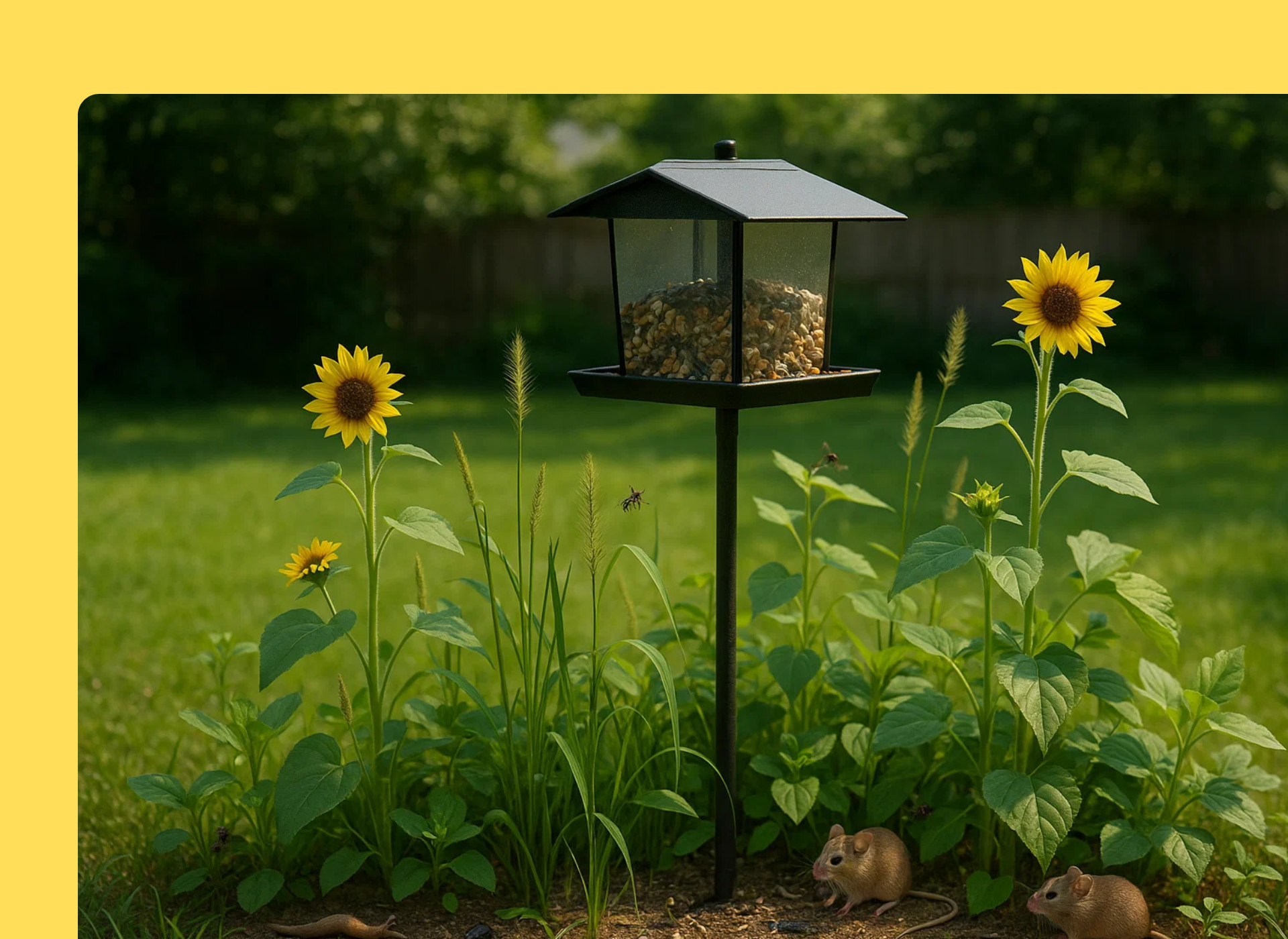
Bird feeders bring so much joy. Cardinals at breakfast, finches in the afternoon, doves waddling in for dinner. For many gardeners—especially those who can’t always dig or plant like they used to—feeding birds is the easiest way to bring life into the yard.
But then you look down. The feeder that was supposed to bring peace and beauty has created something else entirely: a dense, weedy jungle underfoot. Those fallen seeds don’t just disappear—they sprout. Soon you’re trekking through a mini-wilderness just to refill the feeder. And for anyone with back pain or mobility challenges, that patch of sprouts can mean more than just a messy look. It can make paths less safe in summer and attract rodents when the cold weather comes.
The good news? You don’t have to give up feeding the birds. With a few easy adjustments, you can keep the feathered friends happy and keep your garden safe and accessible.
Why Bird Seed Turns Into Weeds
Birds are charming, but they are not polite eaters. Many fling seeds aside to find their favorites, while others simply spill as they peck. Once those seeds hit the ground, you’ve accidentally planted sunflowers, millet, and mystery greens—whether you wanted them or not. By mid-summer, you’ve got a thicket. By winter, you may have moldy piles that mice and other pests find irresistible.
How to Stop the Jungle Before It Starts
Choose “no-grow” seed. Some mixes are heat-treated so they won’t sprout. You still attract the birds, but not the weeds. If you already have seed, you can microwave it briefly to zap its sprouting power before filling the feeder.
Use a seed catcher tray. These attach under your feeder and collect what falls. Just empty it every few days—it’s easier than weeding later.
Change the ground beneath. Placing feeders over gravel, pavers, or a patio makes clean-up simple. Some people even put a garbage bag under mulch as a hidden barrier. No soil contact, no sprouts.
Lay down a weed barrier. Landscape fabric, mats, or thick mulch keep fallen seed from finding a place to germinate.
What to Do If You Already Have a Jungle
If you’re staring at a patch that looks more like a meadow, don’t bend, dig, or haul out the weed-whacker. The simplest fix is to smother it. Toss a tarp, garbage bag, or even cardboard over the area. Without sunlight, those weeds will collapse in a week or two. Then you can rake them out—or just cover with mulch or gravel and move on.
Accessibility Tips
Raise your feeder so you can refill it without stooping. Keep the area underneath flat, tidy, and slip-free with gravel or stone instead of grass. And remember: keeping seed from piling up in winter isn’t just about weeds—it also keeps rodents from setting up camp near your house.
The Takeaway
Feeding birds should be joyful, not another chore. With no-grow seed, seed catchers, ground barriers, and the occasional smothering tarp, you can enjoy the birds without battling a feeder-side jungle. Small changes mean you keep the birds close, the weeds away, and your garden safe for every season.


Leave a Reply