
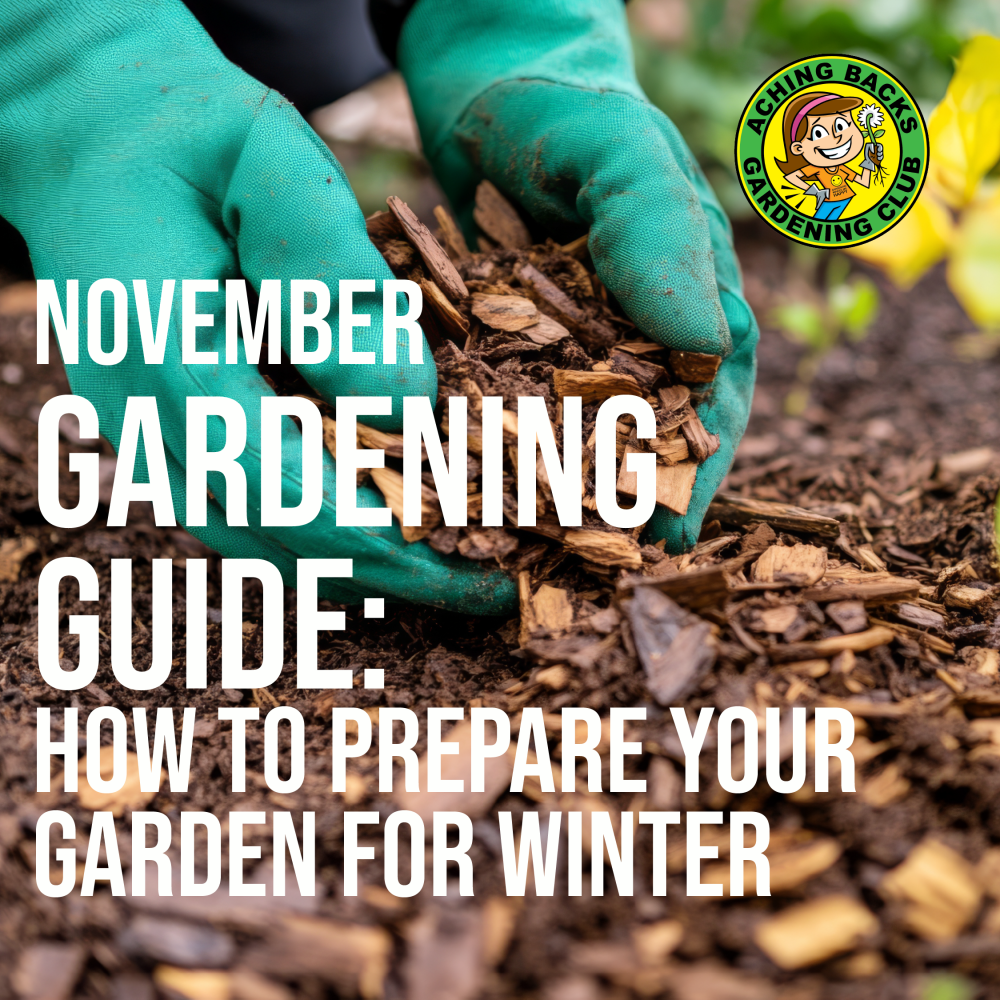
If you live in a cooler climate, by November you’re probably feeling the chill in the air. You’ve pulled out your favorite sweater, cozy socks, and furry boots. Maybe you’re enjoying evenings by the fire, roasting marshmallows, and watching the stars.
When it’s cold outside, it may feel like gardening takes a back seat — but it doesn’t have to. In fact, November can be one of your busiest and most rewarding garden months as you prepare for winter.
Here are some essential garden winterization tips to help your plants stay healthy and ready for next spring.
Caring for Trees and Shrubs
Even as temperatures drop, your trees and shrubs still need care.
- Keep watering: Continue watering shrubs and trees until the ground freezes, especially evergreens. This helps them stay hydrated through the winter.
- Prune shrubs carefully: November is a good time for light pruning to remove dead or damaged branches.
- Planting new trees or shrubs:
- The dormant season (before the ground freezes) is ideal for planting.
- Plant them at the same depth as they were in the nursery.
- Water well and mulch thoroughly to insulate the roots.
- Shape your mulch in a donut shape (not a volcano!) to prevent rot and protect the base.

Perennial and Annual Plant Care
Your perennials and annuals also need attention before winter sets in.
Roses
- Add 5–8 inches of mulch around the base to protect the roots.
- Prune lightly if needed, but avoid heavy pruning — it can damage them in colder months.
Frost-Affected Perennials
- Remove foliage from plants like hostas, irises, and daylilies. Cutting them back encourages healthy spring growth.
- Cut back peonies to reduce the risk of pests and disease next year.
Dealing with Fungal Disease
Watch for signs like:
- Black spots on leaves
- Fuzzy gray mold
- Powdery mildew that looks like dust on leaves
If you see these, remove and discard the infected plant material — don’t compost it. Always sterilize your pruners after use to prevent spreading disease.

Planting Bulbs for Spring Blooms
November is the perfect time to plant bulbs before the ground freezes. Popular options include:
- Tulips
- Daffodils
- Muscari (grape hyacinth)
- Hyacinth
- Crocus
After planting:
- Fertilize with a bulb fertilizer or compost.
- Add a layer of mulch, straw, grass clippings, or chopped leaves to insulate the soil.

Watering and Fertilizing Tips
- Keep watering until the first hard freeze. Even during a dry winter, hydrated soil helps plants survive.
- Add aged manure or compost to enrich your flower beds — but avoid fresh manure, which can burn plants.
Common Gardening Questions (and Quick Answers)
What is the “three-year rule” in gardening?
It describes perennial growth stages:
1 Sleep (first year)
2 Creep (second year)
3 Leap (third year — full growth!)
Common beginner mistakes:
- Planting too many plants
- Not preparing the soil
- Crowding plants together
- Planting too early before soil warms
Easiest flowers to grow:
- Poppies – scatter seeds in spring; one packet can yield thousands of blooms.
- Zinnias – after the last frost, scatter seeds in sunny soil and water well.
Final Thoughts
November doesn’t mean the end of gardening — it’s the start of preparation. Cleaning, pruning, planting, and protecting your garden now ensures a vibrant, healthy spring ahead.
Bundle up, grab your favorite mug of cocoa, and enjoy this beautiful season in your garden.
Enjoyed this post? Join the conversations happening inside our Aching Backs Gardening Facebook Group — where gardeners trade advice, ideas, and a few plant fails too!


Leave a Reply